Glamour (def.): a) from 18th c. Scotland, deriving from the word grammar, and meaning knowledge of the occult, as in casting a magic spell, “the girl was under a glamour;” b) in modern-day usage, enchantment or magic; an attractive and romantic quality that makes certain people and things seem appealing; beauty or charm designed to attract or appeal, e.g. ” in the evening, pin long hair up for more glamour.”
At the races in Paris, circa 1919/1920.
Women subjects featured in the earliest days of photography, and they almost as quickly found themselves paired up with horses, whether at horse events or in portraiture.
A casual search through “vintage woman & horse” on any search engine will turn up literally thousands of early postcard images of women and steeds.
Unlike the photo of the woman on horseback in the ocean (dated 1909), the other pose is the most typical of how women and horses were pictured for postcards in the early days of photography. The horses are usually striking, the women, typically long-haired, pale-skinned and turned out in exotic dress, all designed to spark the fantasies of the viewer.
Too, photographs of women and equines are popular in newspapers in the early decades of the last century. Many of these are quite charming. They depict a time when the horse was a vital part of life and leisure activity. And the images of “society” women and girls at horse shows — of which there is no shortage — are, at times, downright glamorous.
An exceedingly rare and quite lovely C.C. Cook of a young woman and her horse at a show. The Vault archives. A charming moment between a woman and her mount, pictured at a horse show. Photographer unknown.
How the connection between women and horses became such a popular theme in the early days of photography remains somewhat of a mystery. Freud pronounced on the affection of women for the equine, deeming it an expression of a (suppressed) libido. Decades later, scholars in women’s studies speculated that as the power of women over their own lives faded (for the women of antiquity in some cultures were actually very powerful), the symbol of the horse came to represent the longing of women to be autonomous, to be free to decide and act for themselves and to hold power over the course of their own lives.
But whereas such theories might grab our attention, vintage photographs of women and horses were not a case of women depicting women, and selfies were an unknown commodity. The photographers were almost always men, and there was indeed something about the connection between equine and the fairer sex that they found irresistable, that captivated them. So much so that “woman and horse” deserves to be a photographic genre in the first decades of the last century.
None of this romance was lost on photographers of the sport of horse racing. And while there was not an inundation of images of women and thoroughbreds, there are enough to suggest that the subject resonated with horsemen and the racing milieu as much as it did with society at large until the 1940s, when its popularity almost completely dies out.
This is not to say that images of women of the sport, from owners to stable folk, don’t exist after the mid-twentieth century, but merely that later photographs weren’t typically interested in the glamour of a beautiful and/or famous woman with a powerful and/or famous equine. And this was a reflection of societal forces at work, for in the decades following WWII the definition of “glamour” was changing, as was the magic associated with the horse and the sports where they were featured.
Celebrities flocked to see the incomparable MAN O’ WAR, pictured here with actors Jeanette MacDonald and Nelson Eddy. Photo: University of Kentucky digital library.
Man O War became a household name and a legend in his own time, blazing his way to victory after victory. He was magic. He put everyone who beheld him “under a glamour,” the same kind of glamour associated with a movie star or a society belle.
When “Red” retired, his fans were not to be denied, and tours were duly arranged under the supervision of owner Samuel Riddle. Fans flocked to Faraway Farm from around the world: “…Will Harbut kept ledgers for visitors to sign and when Man o’ War died in 1947 there were 63 ledgers containing over 1.3 million signatures.” (Excerpted from Deep South USA online)
1.3 million signatures. Astounding. And I’m betting that at least half of those were girls and women, and among them, women who were famous. For there could be no denying the likelihood that a horse of such power and presence could have been overlooked the popular culture of the time. It meant that stars like Jeanette MacDonald (above) wanted to see and be seen with Man O War.
A pair of ladies dazzle in white at Longchamps in the 1920s. RUNSTAR in the winner’s circle at Tijuana, after winning the 1924 Coffroth Handicap. Pictured is his jockey Edgar Barnes and an unidentified woman who may, in fact, be Alma de Brettville Spreckels, wife of Adolph Spreckles, a California millionaire and thoroughbred owner-breeder. N.E.A. photoFashionable ladies at the track. Old Woodbine in 1925.
The Roaring Twenties were years of flappers and fashion, but these were mere expressions of a brand new century’s decidedly non-Victorian aspirations. Horse racing was a favourite sport of the privileged, as shown in the preceding images and images of the affluent flocking to the track was popular fare for the sports photographer.
In expressing the glamour of the track and thoroughbred ownership, images like these contributed as much to growing a (racing) culture as did prominent racing families like the Vanderbilts and the Whitneys.
Prominent families whose wealth gave them purchase to the finest of everything, and the women in particular, brought an allure that only added to the romance of manicured spaces, handsome thoroughbreds and the thrill of competition.
TWENTY GRAND, pictured just after his win in the 1931 Belmont Stakes, Charles Kurtsinger up, with owner, Mrs. Payne Whitney. The colt had also won the Kentucky Derby that year and just missed scoring a Triple Crown when Mate defeated him in the Preakness. This photograph is typical of the manner in which the excitement and glamour of horse racing was communicated to the public.
A new standard was born: if you were a wealthy and influential businessman, it was de riguer that you ran a stable of thoroughbreds or, at the very least, that you dabbled in racing. It was a matter of social status. If you were a woman related to said businessman, the race track was a place to “see and be seen.”
And just as the “common man” flocked to the “pit” in the Globe Theatre during Shakespearean days to experience the entertainment of a play, while the privileged looked down on them from above, so the middle and working classes flocked to the race track, standing on the tarmack below the boxes and reserved seats of the wealthy, eager to be part of the glamour and excitement of the sport.
The Thirties was a decade of socio-economic misery, as well as one of high art, leisure sport and fashion.
It was exciting days in horse racing, beginning with Gallant Fox’s 1930 Triple Crown for the storied Belair Stud and owner William Woodward, Senior.
The very first American woman to become a leading owner of thoroughbreds during the “Dirty Thirties” was Isabel Dodge Sloane, the wealthy founder of Brookmeade Farm and a fashion icon. Her best runner was Cavalcade (b. 1931), althought the year of his Triple Crown campaign, Isabel had the distinction of having another of her colts, High Quest (b. 1931), beat him into second in the Preakness.
Another Brookmeade champion, Sword Dancer (1956), would give Isabel a Belmont Stakes win in 1959. There was no disputing that the wealthy Dodge heiress was a horsewoman worthy of considerable respect.
But that didn’t stop the press from photographing Isabel endlessly. In the many images of her with her champion thoroughbreds, the essence of the glamour of horse racing finds its purest expression. In short, a glamorous woman paired with a champion like Cavalcade was the kind of publicity sports venues dream about.
1934: Isabel Dodge Sloane with her champion colt, Cavalcade, Mack Garner up. Photographer unknown. Isabel Dodge Sloane in Miami in the 1930s. Photographer unknown.
Alfred G. Vanderbilt’s Discovery and Cavalcade met again in the 1934 American Derby. Still another colt would join them: Helen Hay Whitney’s Singing Wood.
You could be forgiven for overlooking this in 1934:
The beautiful Helen Hay Whitney was a poet and author of children’s books, as well as a thoroughbred owner-breeder and philanthropist. Here she holds the bridle of SINGING WOOD, a leading money earner in 1933 which got him, in turn, a nominations to the 1934 Kentucky Derby in which he finished 8th to CAVALCADE.
Helen Hay Whitney was far more than just another pretty face. Following the death of her husband, she managed Greentree stud and Greentree Stable; so expert and influential was her knowledge of both steeplechasing and flat racing that she was inducted posthumously into the National Museum of Racing and Hall of Fame as one of its Pillars of the Turf.
In this light, it might seem superficial to focus on the glamour she brought to the sport. But like Isabel Dodge Sloane, Helen Hay Whitney was the height of fashion and handsome as he was, Singing Wood certainly plays second fiddle to her in this photo. It was images like this that also reinforced the notion that horse racing, even at a time of economic despair, was primarily the playground of the rich.
The caption on this photograph is incorrect. The woman holding EQUIPOISE’S bridle is the second Mrs. Cornelius Vanderbilt Whitney, Gwladys Crosby “Gee” Hopkins. The magnificent EQUIPOISE was a superstar during his time on the track, from 1930-1935. Noted thoroughbred expert, W.S. Vosburgh signaled out EQUIPOISE as having the most outstanding confirmation of any thoroughbred he had witnessed during his career. Of course, beauty doesn’t win races, but EQUIPOISE was superb at that as well.
Before the days of Cavalcade and Discovery, there was a colt named Equipoise who didn’t need anyone besides himself to conjure glamour. Not even Cornelius Vanderbilt Whitney’s second wife, the attractive Gwladys Crosby “Gee” Hopkins (above), could compete.
Gwladys looks decidedly uncomfortable here even though she rode and participated in events like the United Hunts Racing Association’s “Autumn event,” where she was photographed by noted turf photographer, Bert Morgan. However, she was a society girl even before her marriage to Whitney, and capturing her next to racing’s beloved “Chocolate Soldier” most certainly gave the photo a little extra cachet.
The days of such glamour at the track are over, although a nod is given to them in the costume and headgear of the Kentucky Derby, the Queen’s Plate and Royal Ascot.
But once in awhile, in the modern era, a thoroughbred comes along who wears an aura that conjures up another time, a time when thoroughbreds walked in magic.
GENUINE RISK with the celebrated diva of modern dance, Twyla Tharp, July 30, 1980. Fred McKinney for Capital Newspapers.
One of a very select group was the filly, Genuine Risk.
Look at these two standing side-by-side, you jusy know that a story is being told. But without any other available data, the authentic version of the narrative has clearly been lost. But in 1980, the cultural and photographic tradition of capturing a thoroughbred superstar in the company of a woman who would merit the viewer’s attention was not entirely forgotten, the way Christmas trees aren’t forgotten at Christmas even though few today can say what they represent.
But why would Twyla Tharp consent to be pictured with the great Genuine Risk? On a superficial level, the two appear to have no connection whatsoever. Except that in the summer of 1980, the pair had the market in fame and enchantment cornered.
Genuine Risk aka “Genny” had won the Kentucky Derby, the first filly to win it since Regret in 1915, and the North American public fell under her spell, madly besotted with the big, chestnut filly. She also ran second in a controversial Preakness and in a soppy Belmont Stakes. To this day, Genuine Risk remains the only filly to complete the Triple Crown — and she did it with distinction.
Twyla Tharp had just brought dance to Broadway — something that had never happened before — and she was the darling of New York theatre goers.
So Genny and Twyla seemed a perfect match for their photographic debut, and Fred McKinney, a senior photographer with an outstanding oeuvre to his credit, knew it. His depiction celebrates a different kind of glamour to the Twenties and Thirties — the magic and potency of “girl power” — of two females on two different stages whose accomplishments were as brilliant as they were historical.
Rare as are images like the one of Twyla Tharp and Genuine Risk today, in the Twenties and Thirties women gave the sport of horse racing its muse, complete with a glamour that punctuated its rise in popularity. But these decades are anchored in an age much much different than today.
Still, the past frames the present with history and memory.
And some memories reach out to us through time, giving us an opportunity to be bathed in enchantment.
At the track in the early 1920s somewhere near Paris.
BONUS FEATURES
The 1980 Kentucky Derby — extended version, with Eddie Arcaro, Jim McKay and Howard Cosell.
2) Man O’ War in some rare racing footage
3) An old newsreel featuring news of the 1920s & -30s, including the 1920 Kentucky Derby
4) Gallant Fox — 1930. Also footage of Alcibiades, track announcer Clem McCarthy and some well-known horsemen.
In the annals of history, who or what gets either remembered or forgotten is always a messy business. And thoroughbred horse racing is no different.
The image that starts it all: RUNSTAR, in 1924, after a win on an unidentified track. Photo N.E.A.
Photo back.
There’s nothing sweeter than a mystery and it was the depiction in this photo that grabbed our attention. The delighted crowd around the winner, who dips his handsome head as if in response to the warm smile and the touch of the woman just approaching him, caught on film somewhere in North America in March or April of 1924. The crowd surrounding jockey and horse suggests that one of them, or both, were well-known to the racing public of the day, or else that the win was in a significant race, whether at the local or national level. Another photographic detail that struck us immediately was the resemblance of this colt/filly to a nineteenth century legend: Salvator (b. 1886, by Prince Charlie o/f Salina by Lexington) who raced in the USA at the end of the nineteenth century for James Ben Ali Haggin.
Haggin was a lawyer and mining magnate from Kentucky who struck it rich in California and built the world’s largest thoroughbred stable and breeding farm there in the 1880’s on well over a million acres. In 1898, he purchased the historic Elmendorf thoroughbred farm and eventually relocated his thoroughbred operation to Kentucky where he was referred to as the “Laird of Elmendorf.” Salvator and the filly Firenze/Firenzi (Glenelg X Florida by Virgil) were Haggin’s most famous thoroughbreds, although he did win the Kentucky Derby in 1886 with a colt named Ben Ali (Virgil by Ulrica by Lexington).
A photograph of the incomparable SALVATOR, who bears a distinct resemblance to RUNSTAR.
The Match Race between SALVATOR (outside) and TENNY was one of epic proportions, prompting this famous Currier & Ives print.
BEN ALI, Haggins 1886 Kentucky Derby winner.
The information on the back of the “mystery” photo said little, except for what appeared to be a scrawled name. Having had a good deal of experience unlocking the (English) words in old manuscripts, this one was no challenge: RUNSTER or RUNSTAR.
As it turns out, the resemblance to Salvator that we had noted was no coincidence. The horse pictured was Runstar and he was born in 1919, a son of Runnymede (1908) o/f Salvatrix (1902), a granddaughter of Salvator through a son, Salvation (1892). Given his superhero status on the track, Salvator proved a great disappointment at stud, producing little of merit. But Salvation was one of his better progeny, winning the Champagne and Matron at two and the Ingleside in San Francisco at five, with a number of second- and third-place finishes in the intervening years.
Born in 1884, little FIRENZE (FIRENZI) earned $100,000 for James B.A. Haggin before her retirement. FIRENZE was without question one of the greatest fillies of the nineteenth century in America.
Runstar’s sire, Runnymede was most famously the sire of Morvich, the first California-bred colt to win the Kentucky Derby, which he did in 1922. Runnymede was bred by James R. Keene, one of the great American racing breeders and owners. Runnymede, who had earned the reputation of a first class sprinter in England, was shipped back to America by one Emil Herz, who had purchased him in England at the dispersal of Keene’s bloodstock circa 1914/1915; once here, Runnymede was sold first to Barney Schreiber, who in turn sold him on to Adoplh B. Spreckels, an enormously wealthy Californian and owner of the Napa Stock Farm.
Runstar and Morvich were born in the same year, 1919, and despite the latter’s rise to Derby glory, it was Runstar who the Spreckels’ stable held in the highest esteem until the day he retired. Compared to the handsome Runstar, Morvich was described as a “plain, ungainly colt” with an awkward gait, the result of defective knees. Even though the striking chestnut and chrome Runstar won his maiden at Empire City over 5f and a purse of $1131, he would never find his way into the public’s imagination as Morvich did.
As a two year-old, Morvich was never defeated; as he readied for his three year-old campaign, at least one sports writer claimed that the son of Runnymede would prove as great as Samuel Riddle’s Man O’ War.
“MORVICH TRAVELS HALF-MILE IN 0:46; Covers Distance in Workout in One-Fifth Second Less Than AmericaRecord” the New York Times proclaimed, as the Brock colt worked over the Jamaica track in preparation for his three year-old debut. Crowds gathered trackside just to get a glimpse of him. W.S. Vosburgh noted in “Thoroughbred Types” (1926, privately printed) that “…Not even Man O’ War was more talked of than Morvich during the spring of 1922.” The colt that breeder Spreckels couldn’t wait to sell was a star.
MORVICH. Source and photographer unknown.
Unlikely as it seems to us today that any thoroughbred would be hailed as comparable to Man O’ War, the enthusiasm seemed justified when Morvich took the 1922 Kentucky Derby, his first start of 1922, in fine fashion:
But the Derby would be the last race Morvich ever won. Retired to stand in Kentucky, under the care of Elizabeth Dangerfield, who had also taken care of Man O’ War when he first retired, Morvich eventually made his way back to California where he died at 27 years of age. There, Arthur Mosse took care of him, describing the old stallion as one of the kindest, sweetest studs he had ever known. Morvich produced little of any note during his time in the breeding shed.
1922: WHISKAWAY beats MORVICH in the Kentucky Special. Press photo. Source: Pinterest
But back in 1921, when Morvich and Runstar first arrived on the East coast from the Spreckels’ California stable, it was Runstar not Morvich who toook pride of place and was housed in the number one stall. Morvich was up for sale and despite a daylight win in his first start, was duly sold through the aegis of trainer Max Hirsch, who kept 10% of the colt’s winnings throughout Morvich’s career. Prior to making their first starts, the colts worked together even though Morvich proved a sluggish workmate. The DRF noted, under the heading, “The Colt Runstar Is Much Admired” : “In the opinion of such a good judge of horseflesh as James McLaughlin, paddock and patrol judge at Jamaica, C.W. Carroll {Spreckels’ trainer at the time} …has the best-looking 2 year-old that has made its appearance in the East this year. ..” (DRF Archives, 1921-05-28)
The two year-old Runstar may have been a knockout to look at, but his performance paled in comparision to Morvich’s freaky rise to fame in 1921. However, Runstar can hardly be viewed as an “also ran” that year. He raced 9 times over American and Canadian tracks, and won or placed in 5. The colt was DQ’d from a win in one race at Empire, when his jockey Metcalf reached over and slashed Earl Sande as they neared the finish. The DRF reported , of his win in the Wakefield Handicap, that he was “troublous” but had behaved that day, so he may also have been a high-spirited two year-old. But Runstar was also described in the DRF as “…Never really fit as a two year-old and troubled by a sore mouth in all of his races.” (excerpt from DRF Archives, 1922-04-23)
The Daily Racing Form summed up Runstar’s juvenile season as follows:
“Runstar was one of the hard- luck two year-old colts of last year. He came from California with Morvich…and was the highest tried of the {Spreckels} stable, far better than the two year-old champion {Morvich} — which was sold for that reason. He was a big colt, growing and soft, and never had the proper chance. In races he was fast, but seemed to be without the vitality to finish. Runstar won three races, two at Empire, one the Wakefield Handicap, and another the Autumn Handicap: the Hochelaga, at Montreal. But his prizes were not great or worthy of his reputation, speed or looks. The colt will be in the 1922 Derby and is in Roy Walden’s {Waldron} skilled hands among the Simms-Xalapa farm string at Havre de Grace. The colt has grown in size, health and spirit, and it would not surprise many to see him a vastly improved race horse in the Simms canary and purple colours when he comes out again.” (in DFR Archives, 1922-03-06)
“RUNSTAR An Unlucky Colt” in the DRF, 1922, as excerpted in the quote above.
It seems likely that the Spreckels family shared the sentiment expressed in the DRF, moving their prized colt from trainer Carroll to Roy Waldron, who was the trainer for businessman’s Edward F. Simms’ Xalapa Farm and stable. Simms had agreed to stable and race the Spreckels colt, who now ran in the former’s colours, although still owned by the latter.
The man who took over the training of the Spreckles’ blaze-faced Runstar had begun his career as a jockey. Interrupted by World War One, Waldron served with the U.S. Army’s Fifth Division, the 157 Depot Brigade, before taking out his training licence upon his return to civilian life.
Initially, Waldron’s chief client were Simms and Henry W. Oliver, who were racing partners. As time went on, Waldron would become best known as the trainer of Ethel Mars’ 1940 Derby winner, Gallahadion, who defeated the overwhelming favourite that year, Bimelech.
Ethel Mars’ GALLAHADION in the Winners Circle of Churchill Downs with trainer ROY WALDRON. Source: The New York Times.
Unless we are talking about Man O’ War, or Ruffian, the verdict on any individual’s racing proficiency is as affected by the context in which s/he runs as it is by his/her performance. And Runstar’s world was filled with several notable besides Morvich. Exterminator, Black Gold, Grey Lag, Mad Hatter and John P. Grier were the most renowned of those travelling the racing circuit in the early years of the 1920s, but there were several others, beginning with Kai Sang/Kai-Sang, who were champions in their time and whom our collective memory has failed.
Rare footage of Exterminator’s Kentucky Derby. (Please note that there’s no sound.)
It was Rancocas Stables’ Kai Sang/Kai-Sang who first brought attention to the The Finn, who would sire HOF Zev a year later. In 1921 the Sam Hildreth-trained Kai Sang ranked second-best after Morvich. (In the 1921 Eastview Stakes, it was Runstar’s jockey who slashed Earl Sande, handing Sande and Kai Sang the win.) In his three year-old campaign, Kai Sang/Kai-Sang was arguably the best of his generation, winning the Jerome Handicap, as well as the Lawrence Realization. As a sire, Kai Sang had a respectable career: out of 137 foals, he had 9 stakes winners, of which the filly Khara was the most impressive.
Rancocas Stables’ champion, KAI-SANG/KAI SANG, pictured here in Thoroughbred Types 1900-1925, by Vosburgh, Lanier, Cooley and Bryan. Photograph by Haas.
However, as a broodmare Khara was outstanding. She produced the full siblings Aethelwold, Savage Beauty and Little Sphinx by Challenger II and each one would leave it mark on future generations. Aethelwold and Savage Beauty were stakes winners. Savage Beauty went on to produce Little Hut, dam of stakes winners and important sires (and broodmare sires) Habitat and Northfields. Little Sphinx produced three stakes winners, Equichall, Captor, and Glad, and several of her daughters were important producers. Noors Image, a daughter of Little Sphinx by champion Noor, produced Dancer’s Image, winner of the Wood Memorial, and first in the Kentucky Derby although his win was set down when drugs were found in his system post-race.
Harry Payne Whitney’s BUNTING was another very good colt born the same year as RUNSTAR who won 8 stakes races at 2 and 3. His female family includes Jabot and Jay Trump. Photography by Rouch in the book, Thoroughbred Types 1900-1925, by Vosburgh, Lanier, Cooley and Bryan.
At three, Runstar appeared to be finding his best form, following his return from Spreckels’ stable in Napa Valley CA where he had wintered. It seems clear that racing gurus were expecting more from the colt in 1922, given the press he got and the regard in which he was held, including W. S. Vosburgh, the NY state handicapper and eminent thoroughbred expert. Vosburgh noted that Runstar had “…grown into a great smashing colt much like Salvator, to which he traces through his dam. Speed was Runstar’s forte at two, but he looks like a long distance horse and may surprise the critics by going on.” (excerpt from DRF, 1922-04-23. DRF Archives)
Runstar’s race record until 1924 is sketchy at best. At three, the colt was one of the featured names in the running of the rich Paumonok Handicap at Jamaica carrying a purse of $5,000 USD. Either he ran but failed to finish in the top three or he didn’t start at all; too, Runstar was assigned weight for several graded stakes, including The Excelsior, the Stuyvescant Handicap and the Yonkers Handicaps, as well as the Suburban, but there is no other data on him in these runnings. It is likely that Runstar shipped to Saratoga with the Waldron string in 1922, but more precise information about Runstar’s performance there is nonexistant.
RUNSTAR seemed to get excellent press at the start of his 3 year-old season, as is the case here. Source: DRF Archives, 1922-04-17.
And so it remains until 1924, the year in which Runstar stakes his claim to fame.
Below: In 1932, Phar Lap won the Agua Caliente handicap, initially known as the Coffroth Handicap.
Thanks largely to the DRF Archives, the context of the Runstar photo that started it all became clear: this is the winner’s circle at Tijuana race track on March 30, 1924 and Runstar had just won the Coffroth Handicap, later to become known as the Agua Caliente Handicap, most famously won by thoroughbred legends Phar Lap (1932), Seabiscuit (1938) and Round Table (1958), the last winner before the race disappeared altogether. The Spreckels’ colt had actually been retired to his owner’s Napa Valley farm in 1923/-24 when the idea of racing him at Tijuana became attractive.
RUNSTAR is shown here when his entry into the 1924 Coffroth Handicap in Tijuana was announced. Source: Oakland Tribune.
The Coffroth Handicap was first run in 1917 and was, in 1924, offerring a handsome purse of $43,650 USD to the winner. The Tijuana track was a popular venue at this time for wealthy and influential horsemen like Spreckels who was, in his day, a California “high roller.” Still convinced that greatness lay within reach for his homebred, the decision to run Runstar in the Coffroth was almost certainly made in the fervent hope that the chrome and chestnut son of Runnymede would finally get the recognition he deserved. So it was that the five year-old suddenly found himself back on the work tab under the guidance of a familiar face, trainer Charles W. Carroll. But the time he got to get himself back into the groove was short: a mere two weeks.
Postcard with photo taken on the day of the 1924 Coffroth Handicap. Source: Pinterest.
The Coffroth was run on March 30, a mere three months before the death of Runstar’s owner, Adolph Spreckels. If Runstar hadn’t had much time to get into race-fit condition, it sure didn’t show on race day. Under jockey Edgar Barnes, Runstar led all the way, “…carefully nursed along in front by jockey Barnes, who used rare judgment and showed an uncanny skill in rating his mount along…” and won from fast-closing Osprey and Cherry Tree by a head. Other than a testimonial to Runstar’s courage and heart, as noteworthy was who came in fourth: none other than Exterminator, who, as an ageing champion, was described as “…beaten, though not disgraced.” The finish of the 1924 Coffroth was determined to be the “…most sensational seen in the West.” (excerpts from DRF Archives, 1924-03-31)
Close-up: RUNSTAR with jockey Edgar Barnes and an unidentified woman who may, in fact, be Alma de Brettville Spreckels, wife of Adolph Spreckles. This same lady appears in both photos of RUNSTAR featured here. Photo: NEA.
Carrying his owner’s huge hopes, Runstar had finally proved himself worthy, and Adolph Spreckels must have been delighted.
BLACK GOLD, the 1924 winner of the Kentucky Derby. Source: The Vault library. Photo otherwise unidentified.
Runstar’s Coffroth win did not go unnoticed by either the horse racing industry or the public, indicating the status the handicap and/or its winner enjoyed in 1924. Shortly after Black Gold won the 1924 Kentucky and Louisianna derbies, Ak-Sar-Ben Exposition Company of Omaha, Nebraska approached his owner, Rosa M. Hoots, and Adolph Spreckels to set up a Match Race between Runstar and Black Gold. Initially, it looked as though both owners were interested, but the offer subsequently fell through. Spreckels died in June of 1924 and this almost certainly changed things as far as his breeding operation and stable of runners were concerned.
In October 1924 it was announced that Spreckels’ son-in-law, Walter de Brettville, had engaged trainer Lonny Tryon to train the horses being sent to the Tijuana track and Runstar was among them. After the Coffroth, Runstar’s only recorded stakes race was the 1926 Tijuana Speed Handicap, in which he finished second to Preston Burch’s Thistlewood.
Like his race record, progeny records for Runstar are woefully incomplete. We know that he stood in California in 1923, when Spreckels first thought to retire him. The last extant records of his progeny are in 1939, when the filly June Ray is born. Runstar appears to have lived out his life at the Spreckels stud in Napa Valley where he was born. The date of his death could not be found.
In 1941, Runstar was listed along with Dr. Leggo, Morvich, Alexander Partages and Ervast as one of the greatest California thoroughbreds of the last forty years and it appears that the Spreckels’ colt was inducted into the California Hall of Fame. Whether or not that was the case, it is clear that Runstar was held in the same or an even higher regard as Morvich by the California racing community.
RUNSTAR was one of California’s “greatest.” (DRF, 06-06-1941)
NOTE: THE VAULT is a non-profit website. (Any advertising that appears on THE VAULT is placed there by WordPress and the profit, if any, goes to WordPress.) We make every effort to honour copyright for the photographs used in our articles. It is not our policy to use the property of any photographer without his/her permission, although the task of sourcing photographs is hugely compromised by the social media, where many photographs prove impossible to trace. Please do not hesitate to contact THE VAULT regarding any copyright concerns. Thank you.
To be honest, I feel as though I’m living in a movie these days. When I turn on the TV and see car commercials with families piling up their things in their SUV to go on holiday, or MacDonald’s and Burger King ads with friends standing close together to sample a Big Mac or a fish burger, I think, “What world is this?”
Montreal, my city, has over 1,000 cases of this miserable virus and, like your community, our streets are empty. I’m well but going into my third week of self-imposed isolation and each day can be a challenge in terms of trying to forget that I can’t go out and live my life. I haven’t seen my family since this started, even though I speak to them every day.
One thing that preoccupies me is what I can do to reach out and bring folks some comfort. This is one of the things that I hope will help in some small way.
THE VAULT has been going for almost 10 years now and there are LOTS of posts on here. On this page, you’ll see a search box. If you tap in some of the following names, all articles on that individual will come up.
So here are some names you can call up in the SEARCH box. Several articles will come up for some of the names listed below, giving you a greater selection than a single article. Just click on the one you feel like reading/rereading. Most of the articles on THE VAULT contain video footage as well as photographs, making them a fun way to distract yourself while soaking up a little thoroughbred history from then and now.
NOTE: Where something is in quotation marks, like “My Coal Black Lady,” please use the title to call up the article. (Several articles will come up for some of these, giving you a greater selection than a single article. Just click on the one you feel like reading/rereading.
BATEAU, Man O’ War’s accomplished daughter, as depicted by C.W. Anderson
Like so many, I was an unapologetic A.P. Indy “groupie” and this is my recount of meeting him in June of 2015.
This post is dedicated to the Farish family, Asa Haley and to the staff of Lane’s End, who knew and loved him.
It was early summer and my very first visit to Kentucky. Liz Read and I were privileged to be welcomed at Lane’s End (LE) and given a private tour by Louise Hatfield, the Executive Assistant to Farm Manager, Mike Cline. When asked if we wanted to see the stallions, our response was an enthusiastic “Yes, please!” And when Louise asked who I most wanted to see, I said something like, “Everyone. But especially A.P. Indy.”
“PONY!” I exclaimed, trying to hold back my tears. “Here you are. I’ve loved you forever.” Copyright protected. Used by permission of Liz Read.
As VAULT readers know, I love thoroughbreds and that includes several that are long-gone, like Man O’ War and Equipoise. So I thought I’d be prepared to see “A.P.” as the folks at Lane’s End call him.
Into the stable we went, pausing briefly to visit with Kingmambo and fellow Canadian, Langfuhr, both legendary in my personal lexicon. Their stalls, in glowing red woods with brass fittings, were luxuriant, with straw bedding as deep as a valley.
But when we approached A.P.’s stall, it was empty. My heart sank a tad, even though I knew he was “in the house” somewhere.
The stable where A.P. had his stall was breathtaking in its elegance. Copyright protected. Used with permission from Liz Read.
Louise touched my sleeve, motioning towards the other end of the stable, where a horse and groom were on their way out into the sunshine: “There’s A.P. — he goes out to his paddock around now.”
I noted the white hind leg and swallowed hard. Waves of feeling started to gather inside me.
“There’s A.P.” Copyright protected. Used with permission from Liz Read.
It’s one thing to follow a thoroughbred you care about from afar, but quite another to find them waltzing into the sunlight, right in front of you. Before this moment, I’d never seen a thoroughbred I adored before. As I’ve written about in previous posts, it was largely a case of turning away from a passion — when I was a young woman in my twenties, I believed for some reason that I needed to put away “the loves of my girlhood.”
But as I approached middle life, the passion returned and I was open to receive it. So this moment when I first stood within a few feet of A.P. Indy was overwhelming.
I assumed that we were going to follow him to his paddock and visit with him there. But instead, his groom attendant, Antonio Villalobo, stopped, waiting for us to arrive. In a flash, I understood that I was actually going to meet my idol, face-to-face.
Predictably, as I walked toward A.P., I had what my friend, photographer and artist, Liz Read, has since described as ” a complete meltdown.” Translated, Liz noted that my eyes were filled with tears and that I was completely overcome with feeling.
Lane’s End (LE) is staffed by people who truly love what they do. And that was evident from the expression of Louise, Stallion Manager Billy Sellers and Antonio: Liz observed that they greeted my short “walk to fame” with an exchange of delighted smiles. The kind of smile that people share when they see that you feel the same way as they do about a treasure.
“PONY!” I exclaimed, trying to hold back my tears. “Here you are. I’ve loved you forever.” Copyright protected. Used with permission from Liz Read.
Louise and Antonio share in my delight at finding myself a few feet away from the great A.P. INDY. Copyright protected. Used with permission from Liz Read.
As I drew closer, A.P. watched me out of the corner of one eye. It was a kind, relaxed eye. Gleaming in the light, he waited patiently for me to come closer while I struggled to fully comprehend what was actually happening. Of course, I was equipped with LE peppermints, and Louise had assured me that “A.P. does love his mints.”
“A.P. does love his mints” Copyright protected. Used with permission from Liz Read.
Having been around horses as a youngster, I had learned that you don’t just rush up to them when they don’t know you and pat their noses. Horses tolerate that, but they don’t like it. So, with Louise close by and Antonio at his head, I chatted with A.P. and then proffered the much-adored peppermints. As he crunched away — slowly, savouring the taste — he would pause and raise his head to ponder me.
I don’t know how long we stood there before I actually placed my hand on his proud head.
And then A.P. started to express himself. This doesn’t always happen when a horse meets a stranger. Some horses, sweet as they may be, keep a kind of distance. But when a horse does talk to you, it’s an utterance that awakens that part of your senses that go down deep, to a place where you intuit and receive meaning and feeling without making a sound. With A.P., communication was punctuated by his making eye contact for long moments with ears pricked, and drawing his head ever closer to me.
A.P., Louise, Antonio and I were wrapped in a palpable, living silence — a place where A.P.’s voice could be heard. Within that silence, I understood when to touch, when to kiss — and when to provide an additional mint — always following A.P.’s lead.
First touches shared with Louise, who A.P. knows very well. Copyright protected. Used with permission from Liz Read.
“…He smelled of sunshine and honey.” Photo protected by copyright. Used with permission from Liz Read.
I could feel his warmth right down in my solar plexus and I knew I wanted to kiss him. And so I did. He smelled of sunshine and honey.
The trust with which A.P. greeted a total stranger’s lingering kiss spoke volumes about his relationships with those at LE who knew him best, as well as what he had come to understand from them about deep, abiding and respectful love.
A.P. surrounded by love. Photo is copyright protected. Used with permission from Liz Read.
Finally, it was time for A.P. to enjoy a romp in his paddock and off he went with Antonio, Liz Read and her camera in hot pursuit. I remained outside the barn with Louise. Together we watched him prance at the gate. Once released, he was off.
Louise turned to Billy Sellers, “Just look at him. He looks like a colt.”
Turned loose in his paddock, A.P. was gone in a flash. Copyright protected. Used with permission from Liz Read.
Photo protected by copyright. Used with permission from Liz Read
Photo protected by copyright. Used with permission from Liz Read.
This photo was such a hit with Lane’s End that it appeared on their FB page and in the TDN (below). Photo protected by copyright. Used with permission from Liz Read.
Even though our time together was over, I never felt that it was gone. What I did feel was the absolute privilege of spending some time with A.P. in a manner that felt natural and unhurried.
Today, five years later, and forty-eight hours after I received the news of his passing, these rememories are framed by the scent of sunshine and honey, in a quiet that affirms a love that has no end.
A.P.’s stall at Lane’s End. Photo protected by copyright. Used with permission from Liz Read.
NOTE: THE VAULT is a non-profit website. (Any advertising that appears on THE VAULT is placed there by WordPress and the profit, if any, goes to WordPress.) We make every effort to honour copyright for the photographs used in our articles. It is not our policy to use the property of any photographer without his/her permission, although the task of sourcing photographs is hugely compromised by the social media, where many photographs prove impossible to trace. Please do not hesitate to contact THE VAULT regarding any copyright concerns. Thank you.
When the death of Empire Maker was announced, the response on social media was immediate. It was partly shock. But as the hours passed, shock turned to grief.
This post is dedicated to the connections of Empire Maker at Juddmonte, the Japan Bloodhorse Breeders Association, Gainesway Farm and Don Alberto.
EMPIRE MAKER at Gainesway Farm in Kentucky,. Copyright Gainesway Farm. Used with permission.
Writing on Twitter, photographer Courtney Snow wrote, “Oh Empire Maker.” Simple as were her words, they captured perfectly what I was feeling: dismay that this could happen, loss, an unbearable sadness. Empire Maker’s death seemed particularly cruel coming, as it did, on the heels of the death of his son, Pioneerof The Nile (the sire of America’s Triple Crown champion, American Pharoah) and the death due to foaling complications in 2017 of much-loved champion, Royal Delta.
As a thoroughbred fan and researcher for over half a century, I’ve admired and respected countless individuals. A precious few have reached out to “speak” to me — and Empire Maker was one of them.
I never saw Empire Maker in person.
In my province of Quebec there is no longer any horse racing and gaining access to live horse racing continues to be a challenge. Most networks in the USA won’t take Canadian subscriptions, so I end up doing odd things out of necessity — like following American racing on a channel in Dubai. Despite all that, social media allowed me to witness Empire Maker’s career from the track to the breeding shed.
He was always special to me. Different, the way Man O’ War and a few precious others are “different.” In his eye, creating the impression that he was looking to a place beyond human perception, the “look of eagles.” Only the truly great ones — Man O’ War, Phar Lap, Equipoise, Bernborough, Sunday Silence, Nijinsky and his sire, Northern Dancer, Secretariat, Frankel — have that look. Who knows what it signifies, distinctive as is its expression.
A Juddmonte owned and bred, as a colt Empire Maker appeared to treat the career he’d been handed with disdain; you saw it in his tendency to linger on the lead, as though he’d done enough. As a runner, Empire Maker never did more than he had to do, except perhaps in the Florida Derby, where he showed a gritty determination that was rare.
After that brilliant performance, and out of my untiring respect for HOF trainer Robert “Bobby” Frankel, Empire Maker became my Derby horse, the colt who would carry my flag into America’s most prestigious race. His performance in the Wood Memorial made him the favourite going into the Kentucky Derby, even though, near the finish, Empire Maker’s tendency to wind down once he was ahead is apparent.
However, coming up to the Derby, it wasn’t his ambivalence on the lead but a foot bruise that proved Empire Maker’s undoing, since it got in the way of his training.
The Derby pace early on was sizzling. HOF jockey, Jerry Bailey, was quoted post-race as saying that when he asked him, Empire Maker didn’t go after Funny Cide with his usual “authority.” Years later, Bobby Frankel would say the missed training was too much for his star colt to overcome.
Empire Maker didn’t run in the second leg of the Triple Crown (The Preakness), but he was ready to fire in June in the third leg, the Belmont Stakes. And fire he did — even though the track was muddy and slick — denying New York’s hero, Funny Cide, the Triple Crown.
He would make only one more start, in the 2003 Jim Dandy at Saratoga, where he got going too late to catch the winner, Strong Hope. A foot problem ended his career.
That expressive face: EMPIRE MAKER at Gainesway Farm after his return from Japan in 2017. Copyright Gainesway Farm. Used with permission.
Upon his retirement, Bobby Frankel said of Juddmonte’s homebred, “We weren’t within 10 lengths of seeing this horse’s best race. With his prospects as a sire, considering his exceptional talent, extraordinary pedigree, and incredibly good looks, I want to be remembered as the trainer of Empire Maker in the same way that Horatio Luro’s name is attached to Northern Dancer or Sunny Jim Fitzsimmons’ name is with Bold Ruler.” (Kellie Reilly, Brisnet.com in “Empire Maker lived up to his name as a classic winner, patriarch” published January 20, 2020)
Frankel wouldn’t have made this declaration lightly. He was a man of discriminating judgment who had trained some outstanding thoroughbreds. Frankel had also trained Empire Maker’s dam, Toussaud, who was so difficult that the trainer admitted that near the end of her racing career he didn’t want to train her at all. But Frankel clearly respected the filly, snapping at an interviewer who asked if he had expected the performance Empire Maker gave in the Belmont, “… he’s by Unbridled out of Toussaud, right?”
Empire Maker’s sire, Unbridled, was a much-loved champion who had sewn up the 1990 Kentucky Derby, beating another champion in Summer Squall. Unbridled also won the 1990 Breeders Cup Classic, soundly defeating the Canadian Triple Crown winner, Izvestia. (Note: The 1990 Breeders Cup also marked the deaths of the champion Go For Wand and another horse, Mr. Nickerson. The NY Times referred to it as “Racing’s Darkest Day” — and it was, despite Unbridled’s courageous victory in the BC Classic.)
But Empire Maker’s pedigree was spectacular beyond his sire and dam. He was 4s X 3d to In Reality (a champion on the track and sire of sires), 5s X 4d to Buckpasser (another champion who was also a powerful BM sire), and 5s X 5d to Native Dancer (an American legend), Rough N’ Tumble (sire of champion Dr. Fager) and Aspidistra (dam of champions Dr. Fager and Ta Wee).
Empire Maker had, quite simply, blue-blood-to-burn. Below is vintage footage of some of Empire Maker’s ancestors, all of whom appear within the first five generations of his pedigree:
But it didn’t stop there: Empire Maker’s BM sire was the turf champion El Gran Senor, a son of Northern Dancer who was named after the Dancer’s trainer, the Argentinian-born and Spanish-speaking, Horatio Luro. El Gran Senor raced in England and Ireland, and was trained by the legendary Vincent O’Brien, the first Master of Ballydoyle.
In temperament, El Gran Senor was so sweet that O’Brien regularly brought him out when his grandchildren visited. Irascible as his daughter, Toussaud, may have been, I like to think that the kindness of Empire Maker’s son, Pioneerof The Nile, and grandson, American Pharoah, came to them on a Y chromosome courtesy of El Gran Senor.
Vincent O’Brien introducing EL GRAN SENOR to some of his grandchildren.
Even though he was the only colt of his generation to score in three classic races in 2003, Empire Maker didn’t seem to appeal to American breeders as much as he should have done, given his pedigree, race record and conformation. In 2011 he was relocated to Japan, standing at the JBBA’s Shizunai Stallion Station in Hokkaido.
From 5 crops sired in Japan, Empire Maker had 10 stakes winners, headed by Eterna Minoru(2013) and Power Gal(2016). This wouldn’t be considered a brilliant track record by the JBBA, despite the fact that the young stallion wasn’t getting the very best mares. (It should be noted that in Japan the desire for immediate results is no less tempered than it is worldwide.)
But in America, Emnpire Maker colts and fillies from his few American crops were shaking things up, resulting in the stallion rocketing up the sire lists. Among his outstanding fillies there were the millionaires Acoma(2005), Mushka (2005), Emollient(2010), Grace Hall (2009) and his best daughter, the beloved Royal Delta (2008). In addition, there were other excellent fillies: In Lingerie(2009) and Icon Project(2005), as well as at least a half-dozen others who earned over $200k.
Royal Delta was a strong-willed, competitive filly who had the attitude of a colt, according to her trainer Bill Mott. But she was a huge presence on the track during her racing career and had thousands of fans in North America. Retired in 2013, Royal Delta was saent to Ireland to be bred to Galileo but didn’t get in foal; a second attempt was made but the mare aborted.
In 2017, she delivered a filly foal by Galileo but it would be her last: Royal Delta died of foaling complications. A much-loved champion was suddenly gone. The filly foal survived and was named Delta’s Royalty. She won her first start at Kempton Park in the UK (below) in December 2019. Thousands from the USA and Canada tuned in to watch.
Sons of Empire Maker who made a splash were headed by the millionaires Pioneerof The Nile (2006) and Bodemeister(2009), both trained by HOF Bob Baffert. Pioneerof The Nile’s loss in the 2009 Kentucky Derby to Mine That Bird was an upset that few, if any, had foreseen. But “Nile” also won the Santa Anita Derby, Robert B. Lewis and San Felipe Stakes that same year.
He was retired to stud at the Vinery in 2010 and finally, to Winstar in 2013. Nile’s first crop produced the champions Cairo Prince, Midnight Storm and Jojo’s Warrior, as well as several others who earned in excess of $200k. In his second crop in 2012, Nile sired a bay colt who was named American Pharoah; in 2015, “Pharoah” became America’s first Triple Crown winner in 37 years.
Pharoah’s Triple Crown and BC Classic victoiry was the last push that was needed to repatriate his grandsire and home Empire Maker came home in 2016 to take up duties at the historic Gainesway Farm, from where he could appreciate his son Bodemeister’s son, Always Dreaming, winning the 2017 Kentucky Derby. Always Dreaming is from Bodemeister’s first crop, hinting that the young sire might well have had more to come. If he does, Bodemeister won’t be here to witness it: he was sold to Turkey in 2019.
The hopes invested in Empire Maker were great and I joined those rejoicing on his return, anticipating more greatness to come. Not another American Pharoah, since such monumental talent is rare, but certainly more deeply talented progeny. But those hopes, that promise, was cut short when the stallion died on January 20 of a rare immune deficiency disease called CVID. This disease annihilates the immune system and is so rare in North America that one top immune deficiency expert, vet Dr. Nathan Slovis, stated that he had only ever seen it twice. It is hoped that Empire Maker may be of some help in coming up with a cure.
Of those Empire Makers bred in America since his return, Eight Rings(2017) who won twice in 4 starts at two, appears to have potential. After a hugely disappointing run in the 2019 BC Juvenile, the colt was given a training break. Bob Baffert is pointing him towards the Rebel Stakes in March and if he does well, Eight Rings may get the green light to embark on the 2020 Triple Crown trail.
In the meantime, Empire Maker’s grandson, American Pharoah, is looking to be a stellar sire, and it will largely fall to him to keep Empire Maker’s influence on the breed alive.
From 70 starters to date, Pharoah has sired 26 winners, 4 stakes winners and 3 graded stakes winners. Eleven of his foals have placed in stakes races. Through December 20, American Pharoah’s foals have earned more than $2.6 million (Bloodhorse.com) landing the young stallion the title of leading first-crop sire of 2019 by a wide margin. Pharoah’s progeny are winning over any surface and he’s had a total — as of January 20, 2020 — of 30 winners to date in America, Canada, England, Ireland, France and Japan. True, Coolmore is ensuring that he gets the best mares whether at Ashford Stud in Kentucky or at Coolmore Australia, but that does nothing to diminish the fact that Pharoah’s early progeny record is an absolute standout.
The young stallion is getting foals of a quality that is impressively consistent.
FOUR WHEEL DRIVE, from the first crop of AMERICAN PHAROAH, sporting his BC Juvenile Turf victor’s blanket.
Coolmore’s HONG KONG, also from PHAROAH’S first crop.
2018 filly, born in Australia, out of Deer Valley.
Another Australian-bred from 2018, a colt out of AZUMI.
American Pharoah is an American treasure. Like his grandsire, he’s different. Everything about him says it — the soft eye that looks right through you to some forever place, the balanced and powerful conformation, the elegance of his ancestry. And I see Empire Maker in him just as clearly as I see the influence of Pioneerof The Nile and Littleprincessemma, Pharoah’s dam.
Through the pain of his loss, his legacy goes on, running like the current that powers a mighty river. And I’m happy for that.
BONUS FEATURES
1) Rare footage of the great Toussaud, Empire Maker’s dam:
2) A Visit To Gainesway Farm, Empire Maker’s home:
3) PIONEEROF THE NILE Schooling At Santa Anita. Video by Mary Forney:
4) An Empire That Will Survive It’s Maker’s Loss by Chris McGrath, TDN
NOTE: THE VAULT is a non-profit website. (Any advertising that appears on THE VAULT is placed there by WordPress and the profit, if any, goes to WordPress.) We make every effort to honour copyright for the photographs used in our articles. It is not our policy to use the property of any photographer without his/her permission, although the task of sourcing photographs is hugely compromised by the social media, where many photographs prove impossible to trace. Please do not hesitate to contact THE VAULT regarding any copyright concerns. Thank you.
This is a female family with one incredible knockout punch. They descend from The Byerly Turk sire line — and the influence of their strain on important sire lines and female families can be traced right up to today.
Pictured in the background, THE BYERLY TURK. In the foreground, an aristocratic, possibility The Sultan, of the Ottoman Empire.
Female families traditionally receive less credit than sire lines in terms of their contribution to the makeup of an individual. This bias initially stemmed from the fact that a mare has only a limited breeding life, compared to a stallion, and therefore exercises less influence. However, the mare contributes a full 50% to the DNA of any offspring, and so is hardly marginal in shaping the breed and moving it forward. The other popular theory is that ancestors of any one individual have less and less influence the further back they appear in its pedigree. Clearly, from a genetic stance, an ancestor in the 15 generation has had its genetic contribution diluted over time. Be that as it may, any pedigree is a carefully woven series of genetic markers and without that far-removed ancestor, the individual would not be quite the same.
Also worth noting: we are aware that Bruce Lowe’s Thoroughbred Families (1895) is a theory that has undergone substantial revision due to more recent research. We are using his system here chiefly to trace the chronology of the progeny and descendants of the Agnes family.
THE BYERLY TURK
The Byerly Turk was one of the three foundation sires of the thoroughbred breed. The other two are, of course, the Darley Arabian and the Godolphin Arabian, the latter famously featured in Marguerite Henry’s “King of the Wind.”
Captain Byerly’s Turk stallion was first a noble and courageous war horse during the time of the Ottoman Empire. One current theory states that at the seige of Buda in Hungary in 1688, Captain Robert Byerly of the Sixth Dragoon Guards relieved a captured Turkish officer of his handsome brown/black Turk stallion. Other theories claim that the stallion was captured in Vienna. Either way, he became known as the Byerly Turk because his owner became Captain Byerly. They were litterly thousands of Turk horses bred at this time. Extant records show that Turkish breeders, called “timars” (landowners, a privilege that had to be granted by the Sultan of the empire) had, as a collectivity, so many thousands of Turk horses that exact numbers could not be estimated. Turk horses weren’t bred to make money; rather, they were bred out of national pride and duty to the empire — quite simply, it was a timar’s duty to help preserve the Turk bloodline.
The best of the Turk horses, who were described as strong, powerful and highly intelligent, were co-opted into the Turkish Sultan’s enormous calvalry, where they would take their chances on the battlefield before they were retired to stud, going back to their owners.
Thought to be a reasonably accurate portrait of THE BYERLY TURK, though painted after his death, the stallion is pictured here with his groom. The grooms of Turk stallions were indentured to them from the moment of their birth until the end of their days.
After the approximately 8 year-old Byerly Turk became Captain Byerly’s war horse, it is documented that they participated in battles in Ireland during King William’s War and at the Battle of Boyne in July 1690. During his time in Ireland, there is an account of the stallion at a race meeting at Down Royal in Northern Ireland, at which he reputedly won the top prize, the Silver Bell. That the Byerly Turk and his owner were seconded into the ranks of the Queen Dowager’s Cuirassiers (later to become the 6th Dragoon Guards) tells us that the Byerly stallion was no fine-boned specimen but, rather, a big-bodied type, possibly standing as tall as 16h. We can make this assumption with some confidence, since the horses inducted into this regiment had to be either black or bay, and of “substantial” size and substance.
For those interested in reading more about THE BYERLY TURK, I recommend this book by Jeremy James. Although controversial because of competing theories about THE BYERLY TURK, it is beautifully written and what is imagined is firmly based in a credible historical context. (The only other book on the stallion, titled “The Byerly Turk” by K.M. Haralambos is very good, but very dry, and concentrates on tracing the stallion’s descendants/sire line.)
When he was retired to stud, The Byerly Turk stood at the Byerly estates in County Durham and then in Yorkshire. He reportedly covered very few “well-bred” mares for reasons that remain unclear, making his influence on the development of the thoroughbred somewhat remarkable. His best sons were Basto and Jigg. A descendant of Jiggs, Highflyer (1774), exercised as important an influence as Eclipse (1764) on the evolution of the thoroughbred.
HIGHFLYER (Herod X Rachel by Blank by the Godolphin Arabian). Owned by Richard Tattersall of Tattersall’s fame, as a stallion HIGHFLYER earned more than Tattersall made selling bloodstock. In 1790, the stallion had 109 winners and his stud fee peaked to 50 gns., a handsome sum in the day.
Initially, the influence of The Byerly Turk sire line flourished, but by 2020 it seems inevitable that it is on the verge of extinction: today, over 90% of thoroughbred stallions worldwide descend from the Darley Arabian sire line.
THE AGNES FAMILY: BEGINNINGS
The “Agnes family,” dating back to the birth of matriarch Agnes in 1844, were shining examples of the influence of The Byerly Turk sire line in earlier days.
The celebrated JOHN OSBORNE JR., a famous English jockey of the 1800s.
There appear to be no portraits of Agnes, which is a shame, but she does have a colourful story all her own.
In 1844, one John Howe Osborne, the father of a popular jockey of the day, “Honest John” Osborne Jr. (whose riding career lasted some 46 years and who then went on to become a trainer of repute) attended the races at Shrewsbury, where he purchased a mare with a filly foal at her side for 14 sovereigns. The mare was named Annette, and her filly foal was Agnes. As the founder of the Agnes family, Agnes is considered to be the matriarch of the most important family in ther British Stud book, according to E.M. Humphnis in her biography, The Life of Fred Archer.
The mighty BIRDCATCHER.
Agnes’ second foal was a filly, Miss Agnes (1850), by the famous British sire Birdcatcher (1833), also known as Irish Birdcatcher for his routing of others at The Curragh during his years on the turf. Through his son, The Baron, Birdcatcher was the grandsire to the great stallion, Stockwell, and his brother, Rataplan.
“…Several of Birdcatcher’s sons proved effective stallions. First and foremost was The Baron, who sired the brothers Stockwell and Rataplan out of the great mare Pocahontos, and who became a classic sire in France as well. It’s through Stockwell that Birdcatcher’s sireline comes to the forefront in the breed today through Doncaster, Phalaris, Teddy, Native Dancer, and Nearco. The grey-coated Chanticleer sired St. Leger winner Sunbeam … [another son] Oxford sired Sterling and Nuneham. Both Mickey Free and Knight of St. George were sent to America and met with some success there.” (Thoroughbred Heritage Portraits)
THE BARON (1842), sire of STOCKWELL, an important sire.
POCAHONTOS (1837) pictured with her bay colt, STOCKWELL (1849). The mare is considered one of the most important foundation mares in the UK. (NOTE: Not to be confused with the American mare of the same name.)
One of the most important thoroughbred sires ever, the handsome STOCKWELL.
Miss Agnes began a dynasty all her own.
Through her daughter, Frivolity (b.1867/Macaroni X Miss Agnes), Miss Agnes became the great grandam of one of the top broodmares of the last century, Plucky Liege (1912/Spearmint X Concertina).
PLUCKY LIEGE, a daughter of SPEARMINT X CONCERTINA, the great grandaughter of MISS AGNES.
Plucky Liege produced eleven champions, including a winner of the Epsom Derby, Bois Roussel (1935) when she was twenty-three years old. She was also the dam of Admiral Drake, Bull Dog and Sir Gallahad III. So important was Plucky Liege, largely through a daughter, Marguerite de Valois and sons Bull Dog and Sir Gallahad III, that it is difficult to find a major runner today who doesn’t carry a strain of Plucky Liege in its pedigree.
Bois Roussel: The 1938 Epsom Derby:
In 1863, Osborne sold Miss Agnes, together with her filly foal by The Cure, Little Agnes (b. 1856), to Sir Tatton Sykes, who was in the process of building his legendary stud at Sledgmere.
Like her dam, Little Agnes was to have a long reach established principally through twop daughters.
WILD DAYRELL (1852) and the Earl of Craven. He won the Derby in 1855. WILD DAYRELL was the sire of WILD AGNES. Interestingly,this is one of the earliest photographs of a thoroughbred ever taken.
Here’s how Little Agnes’ influence played out in simplified form:
Daughters of Little Agnes and their get:
1) Wild Agnes (b. 1852/Wild Dayrell X Little Agnes)
A) her daughter, Fair Agnes (b.1853/Voltigeur X Wild Agnes): Ancestress of the important sire Desmond (1896), a son of St. Simon. Desmond’s daughter, Molly Desmond, out of champion Pretty Polly, appears in the 5th generation of Northern Dancer’s pedigree. It is through Molly Desmond that we come to Lady Angela, the dam of Nearctic, sire of Northern Dancer.
The handsome DESMOND (1896), a son of St. Simon.
Champion of the turf and British heroine, PRETTY POLLY by Alfred Charles Havell.
MOLLY DESMOND (1914/ Desmond X Pretty Polly), great grandam of LADY ANGELA, who was the dam of NEARCTIC, the sire of NORTHERN DANCER. Photo courtesy of Thoroughbred Heritage online.
The young LADY ANGELA (1944). The daughter of HYPERION was imported to Canada by E.P. Taylor. And the rest, as they say, is history.
NORTHERN DANCER: In the beginning…
A-i) Wild Aggie(b. 1870/ Wild Dayrell X Fair Agnes) produced Dolly Agnes (1883), ancestress of: Sulamani; the important sire Green Dancer; Prix de l’Arc de Triomphe winner Solemia; Authorized, Derby champion and sire of 2-time Grand National winner Tiger Roll; champion 2,000 Guineas winner, Makfi; champion filly November Snow and Kentucky Derby winner, Strike The Gold.
The handsome GREEN DANCER (1972) was one of NIJINSKY’S many successful sons at stud.
TIGER ROLL: His second Aintree Grand National win
A-i/1) Frivolous (b. 1875/ Friponnier X Wild Aggie): ancestress of champions including Epsom Derby winner Slip Anchor (1982); the Wildenstein’s Star Lift (1984);Stacelita (2006); Salomia (2009); Buena Vista (2006); and Manhattan Cafe (1998).
SLIP ANCHOR & Steve Cauthen: The 1985 Epsom Derby:
The superb STACELITA now makes her home in Japan, where she has already produced the champion SOUL STIRRING, a daughter of FRANKELfor owner Teruya Yoshida.
2) Another daughter of Little Agnes, Bonnie Agnes (b. 1875/ Blair Athol X Little Agnes) is the ancestress of Zabeel, Detroit, Carnegie and Herbager.
DETROIT’S 1980 Arc win:
Again put to The Cure, Miss Agnes produced another filly and a full sister to Little Agnes, Polly Agnes, in 1865. The filly was small and delicate, and owner Sir Tatton Sykes, it is variously reported, took an extreme dislike to her. Sykes accordingly offerred Polly Agnes to his stud groom, John Snarry. Snarry held a far more positive view of the filly, took her and sent her on to his son at The Newstead Stud, in Malton, North Yorkshire. Clearly, Snarry Sr. was a fine judge of bloodstock, because Polly Agnes was to become the most famous of all of the Agnes family descendants. Snarry’s Newstead Stud may have been modest, but it was about to become one of the most prestigious breeding establishments in Great Britain through Polly Agnes.
Snarry determined not to race his little filly but to breed her instead. Polly Agnes’ first foal, by Cathedral (b. 1861), a son of the excellent Newminster (b. 1848), was a colt who was named Rural Dean (b. 1869) and he did nothing much. Snarry decided to send Polly Agnes to the important British sire, Macaroni (b. 1860), winner of the Derby Stakes, the Two Thousand Guineas Stakes and the Doncaster Cup. The result was a filly he named Lily Agnes (b. 1861).
The stallion MACARONI (b.1860) during his racing days. Painted by Harry Hall in 1863.
LILY AGNES by MACARONI X POLLY AGNES during her racing career.
LILY AGNES
From extant paintings, it appears that Lily Agnes held some resemblance to her sire. She may not have been a beauty, but she was the first of three fillies from Macaroni – Polly Agnes matings that would, according to noted sports writer, William Scarth Dixon ( in “In the North Countree — Annals and Anecdotes of Horses, Hound and Herd”) result in “…some of the finest horses the world has ever seen.”
It seemed that the filly also carried some physical resemblance to her female family. Lily Agnes was described by Scarth Dixon as “…a game looking mare, light of flesh like her grandam but with immense propelling power and famous limbs. She also had the lop ears that are a peculiarity of the family.” Once in training. Lily Agnes’ true measure began to surface. She won all 4 of her starts at 2 with comparative ease; in 1874 she won 7 of 10 starts, winning the Northumberland and Doncaster cups against the colts. But her greatest performance (William Scarth Dixon) came in 1875, when she won the Great Ebor Handicap against some very good colts carrying an impost of some 8lbs.
Once retired, John Snarry sold Lily Agnes to the Duke of Westminster in 1880; she was in foal to Doncaster at the time. Of course, there were great expectations for Lily Agnes as she was, at the time, one of the few great race mares of her age. The Doncaster colt foal was named Rossington (b. 1881) and had moderate success. A full sister, Farewell (b. 1882), won the One Thousand Guineas for the Duke.
LILY AGNES pictured here with ORELIO (b.1894) by Bend d’Or.
But the Duke was not convinced that Doncaster was the right sire for Lily Agnes, selecting instead Bend Or. And from this mating came an individual who is the most important sire of the 19th century — and who was, as well, a brilliant race horse: Ormonde.
ORMONDE
There are countless stories of champions who were underrated or even openly disliked by their owners when they were youngsters, and such is the case with Ormonde. The Duke wasn’t overly impressed with him, but kept him and sent him off to trainer John Porter at Kingsclere Stables.
John Porter was an ambitious man with enough foresight to buy Highclere from his mentor’s, Sir Joseph Hawley, estate. He re-designed Highclere and laid down the Watership Down gallops that are still in use today. Porter also founded Newbury racecourse. (The stable passed to trainer Ian Balding in the second half of the 20th century and is now run by his son, Andrew Balding. Ian trained the fabulous Mill Reef at Kingsclere, as well as Mrs. Penny, the beloved Lochsong, Tagula, and, in total, 2,000 Kingsclere winners before his retirement.)
JOHN PORTER’S Highclere Stables and his residence, Park House. The first photo shows JOHN PORTER. The Illustrated Sporting and Dramatic News, January 7, 1899.
John Porter became one of England’s most prestigious trainers. Among his charges were three Triple Crown winners in Ormonde, Common and Flying Fox; Ormonde’s good son, Orme; Oaks winner Geheimness; and that same year, another Derby winner in the filly Shotover, as well as (British) Filly Triple Crown winner, La Fleche. Porter was clearly a terrific trainer, but he also possessed another valuable character trait that more often than not pays off: patience. Such was the case with Ormonde; when the colt arrived at Kingsclere he was a less-than-impressive physical specimen, but under Porter’s care and patience, he not only won the British Triple Crown but retired undefeated.
As a sire, Ormonde had a storied life, travelling from England to Argentina to California then back to England and finally, back to California again. His sire record isn’t great, with few sons and daughters in general, and this was because Ormonde was not a healthy horse. He was a roarer and always had breathing issues, a problem attributed to his dam and the Agnes family. Illness affected him, making him subfertile as well. Given this, his stallion travels in the late 19th/early 20th century seem ill-advised, if remarkable.
However, Ormonde is the great great grandsire of Teddy, through Ajax by Triple Crown champion Flying Fox. French-bred Teddy sired Sir Gallahad III (out of Plucky Liege), La Troienne and Bull Dog (also out of Plucky Liege), changing the face of American breeding forever.
Sir Gallahad III sired the Triple Crown winner, Gallant Fox, Kentucky Derby winners Gallahadion and Hoop Jr., and Preakness winner High Quest. He also sired Roman (sire of champions Hasty Road, Romanita and Broodmare of the Year {American} Pocahontas); Fighting Fox (a full-brother to Gallant Fox, who sired the champions Fighting Step and Crafty Admiral); Insco (sire of champions Unerring and Inscoelda), Hadagal, Black Devil (winner of the Doncaster Cup in the UK), Count Gallahad, Sir Damion, Sir Andrew, Bold Irishman, and Amphitheatre.
GALLANT FOX’S (American) Triple Crown:
Teddy was also a notable BM sire. The best of his daughters was La Troienne, the dam of Bimelech and Black Helen, who is also the grandam of Busher, great grandam of Buckpasser and the ancestress of Numbered Account, Easy Goer and Smarty Jones, among others.
Bull Dog, a full brother to Sir Gallahad III, was the Leading sire in 1943. As a BM sire, he was very effective and was Leading BM sire in 1953, 1954 & 1956. His most influential son was Bull Lea, the sire of Triple Crown winner, Citation.
All this having been said, we still aren’t “done” with Lily Agnes. The mare had five other matings with Bend Or, one of which produced the filly Ornament (1887). Ornament wasn’t much on the turf, but as a broodmare, she gave the world a jewel in Sceptre (1899), by Persimmon.
Sceptre raced during the same time as champion Pretty Polly, but the two never met on the turf even though they were often compared in the tabloids, in what was a mock rivalry. Sceptre was a champion of great depth and accomplishment, so much so that she deserves her own place on The Vault — and she’ll have that before the year is out. So we won’t detail her astounding turf career here. But whereas her so-called rival, Pretty Polly, led a life of luxury, Sceptre was not so lucky; in addition, she was underrated as a broodmare, failing to produce anything regarded as “important.”
However, as often happens, it can take more than a generation for the blood of a superstar like Sceptre to show itself. And it was her daughter, Maid of the Mist (1906) by Cyllene (1895) who would carry Sceptre into the future through a son, Craig An Eran (b. 1918/Sunstar by Sundridge X Maid of the Mist by Sceptre).
CRAIG EN ARAN as depicted by A.W. Stirling-Brown.
One of the best in England in 1921 at 3, Craig En Aran won the 2000 Guineas, St. James Palace Stakes, the Eclipse Stakes and finished 2nd in the Epsom Derby and 4th in the St. Leger.
At stud he proved successful, if not brilliant. His best son was Admiral Drake (b. 1931/Craig En Aran X Plucky Liege) — and note that “the Admiral” carries two strains of the Agnes family through both his sire and his dam. Admiral Drake sired the Epsom Derby winner, Phil Drake (b.1952/Admiral Drake X Philippa, from the Teddy sire line) but Admiral Drake and his sire, Craig En Aran, are arguably more of interest here because they appear in the 4th and 5th generations, respectively, of Halo ( b. 1969/Hail To Reason X Cosmah), as does Sir Gallahad III (through Plucky Liege).
HALO’S sire, HAIL TO REASON, winning as a 2 year-old at Monmouth Park:
Halo, a great and memorable sire, despite his vicious temperament.
And Halo is, of course, the sire of Sunday Silence (b. 1986/Halo X Wishing Well by Understanding) among other excellent progeny.
And Sunday Silence completely changed the face of Japanese breeding through his daughters and sons, the most prepotent of which was arguably the late Deep Impact (b.2002/ Sunday Silence X Wind In Her Hair by Alzao, Northern Dancer sire line).
1989: Two descendants of the Agnes family, SUNDAY SILENCE and his foe, the mighty EASY GOER, meet again in the Breeders Cup Classic:
The Great One: DEEP IMPACT
IN CONCLUSION
Believe it or not, this isn’t even a complete record of how “those Agnes girls” shaped the breed worldwide. Truthfully, why this female family hasn’t had its very own book published is surprising. Of course, we can’t say that the strains of this family directly influenced important individuals like Halo or Sunday Silence or Northern Dancer, but we can hold that without the Agnes family these individuals could never have been.
To say that the lop-eared Agnes and her progeny were remarkable is an understatement. Their story stands as one of the most remarkable in thoroughbred history.
SELECTED BIBLIOGRAPHY
Dixon, Scarth William. In The North Countree: Annals And Anecdotes of Horses, Hounds and Herds. Read Books, 2013. Online reference.
Gillies, Scot. Rare Thoroughbred Sire Lines — Ormonde and Teddy and Damascus. Blood-Horse online, December 19, 2018.
Humphris, Edith Mary. The Life of Fred Archer. London: Hutchison, 1923.
Hunter, Avalyn. American Classic Pedigrees. Lanham MD: Blood-Horse Publications, 2003.
James, Jeremy. The Byerly Turk. Mechanicsburg, PA: Stackpole Books, 2005.
NOTE: THE VAULT is a non-profit website. (Any advertising that appears on THE VAULT is placed there by WordPress and the profit, if any, goes to WordPress.) We make every effort to honour copyright for the photographs used in our articles. It is not our policy to use the property of any photographer without his/her permission, although the task of sourcing photographs is hugely compromised by the social media, where many photographs prove impossible to trace. Please do not hesitate to contact THE VAULT regarding any copyright concerns. Thank you.
What a decade it has been! All over the horse racing world, champions emerged to dazzle us and lift our spirits.
There were so many great thoroughbreds in the second decade of the twenty-first century, from Australia to Japan to the UK, Europe and North America, that I gave up on the idea of attempting to acknowledge each one here. Or to make a list of the “Top Ten” horses or moments of the decade.
When I look back, I’ll remember many, but the individuals that punctuate the passing decade for me are the ones who were more than figures on a screen. They touched me deeply in one way or other, inspiring imaginings as they took up residence somewhere close to my heart. Like a besotted paramour, I awaited each of their exploits with an anticipation so intense it hurt. They made my spirit dance.
So these are my stars of a kingdom filled with stars. I have made no attempt to compare them, because I know that comparisons are pointless; for that reason, they appear in chronological, not hierarchical, order.
To the connections of each of these great thoroughbreds, who so graciously gave of their time so that we could really get to know them, I give thanks. I also note that, the connections of all the thoroughbreds on my list save for one allowed their horses to race into their adult years, when their bodies and minds had matured, rather than pulling them off the public stage as 3 year olds.
In North America we have been conditioned to think that keeping older horses in competition is a risk but, in fact, campaigning babies before they have physically developed is far more dangerous. It was wonderful to be reminded what thoroughbreds at the height of their powers could do.
1) ZENYATTA
(2004, Street Cry X Vertigineux by Kris S.)
Some Powerful Ancestors: Native Dancer, Tom Fool, Nashua, Never Bend, Cosmah, Prince Rose, Hyperion, Mumtaz Mahal, The Tetrarch, Bimelech, Teddy.
It was the final year of the great Zenyatta’s racing career and as 2010 opened, she stood a Titan — undefeated in 12 starts, 2008 BC Ladies Classic and 2009 BC Classic winner, and about to garner her second Eclipse Award, as older female. In the latter case, fans were deeply disappointed by her loss of Horse of the Year for 2009, given that she was the first filly/mare to ever win the 2009 BC Classic and to ever win two different BC races. Instead, the title went to another remarkable filly, Rachel Alexandra, who was also winding down an incredible career. Rachel had won the Preakness, together with the Kentucky Oaks, Haskell and the Woodward against older males in 2009, and was as beloved by racing fans as Zenyatta.
By 2010, we all knew Zenyatta, our “Dancing Queen,” intimately. They were family. We knew her owners, Jerry and Ann Moss and the other members of “Team Z” — trainer John Shirreffs, grooms Mario Espinoza and Carmen Zamona, exercise rider Steve Willard, jockey Mike Smith. We knew that Zenny loved her Guinness. A darling of the press, a star of 60 Minutes and the centre piece of her own website and “Zenyatta’s Diary,” written by the Moss’ racing manager, Dottie Ingordo Shirreffs, Zenyatta was the flagship of racing for millions of fans worldwide.
She contued her winning ways, chalking up 19 wins before the 2010 BC Classic, where she would bid to win it for a second time, a feat only accomplished once before, by the incomparable Tiznow.
Zenyatta arrived in Kentucky on Nov 2, 2010 for her BC run and the world was there to greet her:
I wanted her to do it. She was one of the most exceptional mares in North American racing history and putting colts to the sword felt like a fitting way to close out a brilliant career.
But when it came, in the night at Churchill Downs, victory was not to be. Lagging behind the field for too long, then caught wide on the turn coming home, Zenyatta still ran what was arguably the most impressive race of her career, even though she crossed the finish line a head short.
The 2010 BC Classic was the only loss of a 20-race career in which 13 of her wins came in G1’s.
To say the loss was a heartbreaker to all, from Team Z to fans a continent or more away, is an understatement. But I will always recall the words of an Australian turf writer a few days later, who wrote “…While it stands as her only loss, you know nothing about thoroughbred racing if that’s all you take away from her defeat. Zenyatta did things most thoroughbreds can’t do — coming from over 20 lengths from the leaders and travelling at over 60 mph in her drive to the wire, to lose by a diminishing head. Most of us will never see anything that even comes close to that ever again. This is one absolutely incredible thoroughbred — and that’s what I hope you will remember about her final race.”
Zenyatta was retired in December of 2010. Arriving at Keeneland from California with her whole team, she was greeted by hundreds of people who stood out in the freezing cold to welcome her to Kentucky.
In January 2011, Zenyatta was awarded the 2010 Eclipse Award for Horse of the Year.
2) FRANKEL
(2008, Galileo X Kind by Danehill)
Some Powerful Ancestors: Danzig, Northern Dancer, Nearco, Native Dancer, Buckpasser, Ribot, War Admiral, Man O’ War, Blue Larkspur, La Troienne, Bend Or, Commando, Domino.
Frankel started his career with a win that marked him as a “promising” juvenile, on a wet afternoon at Newmarket, crossing the finish line with Nathaniel, another Galileo colt, at his throat latch.
Named after the incomparable American trainer, Bobby Frankel, who had trained for Prince Khgalid Abdullah’s Juddmonte in the United States, Frankel was by Galileo out of the Prince’s Danehill mare, Kind. And even though his maiden win was in no way remarkable, we had all learned to “watch the Galileos.” I was intrigued by both Nathaniel and Frankel and resolved to keep an eye on both.
The British racing community is less inclined to “go over the top” about a horse than many other racing communities around the world, but by the end of 2011, it was pretty much impossible NOT to keep your eye on Frankel and his jockey, young Tom Queally. And even seasoned racing commentators struggled to find words to represent the history they knew they were living.
As for Frankel — he just kept going on and on.
After watching thoroughbreds for over 50 years, I knew I was a witness to an extraordinary individual, one who had been the product of 35 years of breeding by the Prince — as well as quite literally centuries in the making. Whereas the mysteries of breeding the ultimate thoroughbred have managed to elude even the most exacting scientific inquiry, what remains clear is that the evolution of the breed is not the work of any one person, but rather the combined efforts of breeders down through the centuries, together with the genetic contribution of many fine sires and dams. In Frankel, history and lineage had found its truest expression.
I often find myself wondering what it must have been like to experience Eclipse, or The Tetrarch, or Pretty Polly, or Man O’ War in their time, to have been one of the spectators, to have acxtually seen them in the flesh.
Frankel felt exactly like that kind of experience to me. I would be one who could say, “I was there.”
But running alongside Frankel’s unequivocal reign on the turf was another story, one that made each victory bittersweet: his trainer, Sir Henry Cecil, was dying. The irony was cruel, that one of Great Britain’s greatest trainers should come upon his crowning achievement in his last years. However, as Sir Henry would acknowledge shortly before his death, “I had to be there for Frankel” and there he was, in every sense of the word, right up to Frankel’s very last race.
The story that was Sir Henry and his brilliant colt, together with all the emotion, came together on the Knavesmire at York in the 2012 Juddmonte International:
The lovely thing about a horse race is that it shows us how to live in the moment.
When you are watching the career of one of the most remarkable thoroughbreds of all time, it is indeed a blessing to live each and every moment fully.
3) BLACK CAVIAR
(2006, by Bel Esprit X Helsinge by Desert Sun)
Some Powerful Ancestors: Nijinsky, Northern Dancer, Vain, Nasrullah, Hyperion, Hurry On, Scapa Flow, Gainsborough, Ajax, Isonomy, Doncaster.
I stayed up deep into the early morning to watch her run and paid for it. But there was simply no better place to be: she was my “whirlwind from down under” and I adored her.
In 2012 in the UK it was all about Frankel — and so a (usually) good-natured, if hard-nosed, rivalry rose up between the devoted on two sides of the world:
I’m never tempted to enter into such rivalries, but I will say that neither Frankel nor Nelly took a backseat as far as power and turn-of-foot were concerned.
“Hear The Angels” …..”The Pride of Australia” ……. “Regal Power Wrapped in an Elegant Machine” …. “And the Legend Lives On,” such were just a few of the calls that greeted the big, dark mare as she crossed the finish in her native land, her polka dot silks rippling on jockey Hugh Bowman, the field toiling behind her. She was the fullest expression her ancestors’ majesty, courage and heart.
If it was the signature shake of the reins and the immense surge of chest and forelegs in answer that I waited for when Frankel ran, in Nelly’s case it was the relentless, driving force of her sweep to victory that made my heart leap up.
Travelling to England in her much-publicized rubber suit to run in the 2012 Diamond Jubilee Stakes, Nelly delivered, though not in the style we were accustomed to see.
It was race #17 and never before had the great mare finished in a photo. Looking back, I still see it as a blip on the screen. After all, Nelly had journeyed from halfway around the world to appear at Royal Ascot.
Nelly went on to secure 25 straight victories in as many starts, 15 of which were G1s. It was an absolutely astounding record, by any standard.
So astounding, that as I look back on it, I still find Black Caviar’s brilliance difficult to fully register.
Sometimes it’s like that with the great ones.
4) TREVE
(2010, Motivator X Trevise by Anabaa)
Some Powerful Ancestors: Sharpen Up, Secretariat, Northern Dancer, Vaguely Noble, Bahram, Spearmint, Hyperion, Isinglass, Persimmon, St. Simon.
I can’t deny it. By the time Treve came into my life, I was pretty much convinced that I’d already witnessed the best it could get.
Then along came Treve.
I always paid attention to what the Head family was up to; this had been true since Freddy Head’s victories on Miesque grabbed my attention in the late 1980’s. After his retirement from riding, Freddy and his sister, Criquette Head Maarek, embarked on careers in training in France, with Freddy closing out 2009 with his brilliant mare, Goldikova. For her part, Criquette Head Maarek enjoyed popular successes with the likes of Three Troikas, Bering and Anabaa, who would go on to become an important sire and the BM sire of Treve.
Recording her first win (above), Treve looked a juvenile with possibilities. But her victory hardly left the world breathless — the tall, lithe filly was still a work in progress.
The Prix de l’Arc de Triomphe is the premier grass race for thoroughbreds in the world and France is its home. There is nothing better, as far as the French racing public is concerned, than to have a French-bred and trained Arc winner.
Champions appear when hearts dream them, and are ready to receive them. And by 2013, Treve, bred by the Head family and trained by Criquette Head-Maarek, was ready to answer those French dreaming hearts.
Coming up to the 2013 Arc, Treve had won the Prix de Diane and the Prix Vermeille, both distinguished races in their own right. The undefeated 3 year-old entered the Arc partnered by Thierry Jarnet, Frankie Dettori having broken his ankle in a fall in England. Among the “big horses” were Japan’s brilliant Orfevre, Coolmore’s Ruler of the World, Intello, and Juddmonte’s Flintshire.
It was a scintillating victory for a youngster, and especially since the Arc traditionally favours more mature thoroughbreds.
Youngster or otherwise, to win the Arc once is considered the pinnacle of any turf horse’s career. But to win it twice? In 2014, when Treve took her second shot at the Arc, only six had won it twice, of which Corrida (1936, 1937) was the only filly.
At first, it didn’t look as though Treve would be ready. Plagued by less-than-perfect feet, it was late in the racing calendar before she was declared a starter. Partnered again by Thierry Jarnet, this time she would face Japan’s quirky but talented Gold Ship, England’s Kingston Hill, second to Australia in the Derby, and Sea The Stars’ champion daughter, Taghrooda, winner of the 2014 Oaks.
Not only did Treve rise to the occassion, but she did it in style. The daughter of Motivator had secured her place in history.
The decision was made to campaign Treve in 2015, with the goal a third tilt at the Arc. Her thousands of fans stepped up as well, even composing a song for her. And as the video portrays, hopes were high for a mare beloved by connections and racing public alike.
In the end, Treve was unplaced behind the winner, England’s magnificent Golden Horn, ridden by Frankie Dettori and trained by John Gosden.
While hopes were dashed, it did little to diminish Treve. The Arc is a gruelling affair, one that asks all from those who run it. And Treve flew home a decisive winner twice in consecutive years.
The filly with the beautiful face and kind eye, who roused the hearts of a nation, accomplished the rarest of a feats — one that legends like Sea Bird, Ribot, Dancing Brave and Nijinsky couldn’t attain.
5) AMERICAN PHAROAH
(2012, Pioneerof The Nile X Littleprincessemma by Yankee Gentleman by Storm Cat)
Some Powerful Ancestors: Secretariat, Fappiano, Northern Dancer, Mr. Prospector, Brigadier Gerard, tracery, Pretty Polly, Fair Trial, Menow, Mata Hari, Man O’ War.
I can close my eyes and still see myself as a girl, watching Secretariat’s Belmont in complete and utter awe. Then came the finesse of Seattle Slew, followed by the heart-thumping charge of Affirmed to the wire, with the courageous Alydar glued to his throat-latch.
But then came a seemingly endless drought.
I don’t know that I’d given up on seeing another Triple Crown winner during my lifetime, but I sure was discouraged. Year after year, I was glued to Churchill Downs and then Pimlico, wishing for a Triple Crown. But defeats like that of California Chrome and Smarty Jones, and losses like that of the incomparable Barbaro, made dreams of another Triple Crown champion seem unlikely.
It had been 37 years — almost 4 decades — since Affirmed defeated Alydar at Belmont when a bay colt from California called American Pharoah hit the Triple Crown trail, mispelled name and all, for Hall of Fame trainer Bob Baffert.
As a two year-old, Pharoah had them buzzing in California. Even though an injury kept him out of the Breeders Cup in 2014, the juvenile still took the Eclipse Award for outstanding two year-old.
At your own risk do you ever ignore a Baffert runner: the man has the magic and the skill of a great horseman. He can spot a champion-in-the-raw and knows how to condition them properly for the crucible that is the American Triple Crown, a run of three races beginning with the most prestigious, the Kentucky Derby, followed by the Preakness and wrapping up with the Belmont Stakes in New York, over “Big Sandy,” the kind of track so deep and immense that it would dwarf a brontosaurus. There’s barely time for a young horse to catch its breath between the three of them, and each one is run over a different distance, the Belmont being the longest at 1.5 miles (2.4 km) with a long final stretch where many TC hopefuls have been caught — 37 by 2015, to be exact.
Pharoah had a beautiful pedigree — a son of Pioneerof The Nile, himself a son of the mighty Empire Maker (Unbridled X Toussaud by El Gran Senor). His dam, Littleprincessemma (Yankee Gentleman by Storm Cat, a grandson of Secretariat) similarly carried the potential of daughters and grandaughters of Storm Cat, who continues to influence the pedigrees of champions. But pedigree had been no guarantee of Triple Crown success over the decades since 1978.
When I watched the Baffert colt run away from the field over a sloppy track in the Rebel I was impressed….but was I ready to give my hopes and my heart away?
Then came the Arkansas Derby, Pharoah’s last prep before the first Saturday in May in Kentucky. Like the Rebel, the colt’s win seemed effortless, with jockey Victor Espinoza asking him for little and, once again, Pharoah crossed the wire with his ears pricked, as if to say, “So when do I get to really run?”
After this performance, he had me hook, line and sinker. And although it’s easy to have 20/20 vision in hindsight, the Arkansas gave me a glimpse of something unique, although what it was, I knew not. Thinking about it, it seemed to have something to do with his way of going that seemed deceptively slower than it actually was — and effortless, as though the colt could run for days.
By the time Derby day had arrived, Coolmore had already sealed the deal on Pharoah’s breeding rights. I took note of that.
Going into the race, I was most fearful of the gutsy Mubtahiij, and mindful of Carpe Diem and Dortmund, another Baffert entrant. Pharoah started from an outside post position — never ideal in a 20-horse field on a track where the first turn came upon you fast.
I wasn’t a fan of how Espinoza rode him on Derby day, but Pharoah got it done, persevering in the final strides, in spite of being so far from the rail around the turn. Meaning that he’d been asked to make a longer run than the others going in to the final turn and asked to do it early on. I could only respect the colt for his courage, getting up like that as the wire loomed, even though I’d been expecting him to lead the field home by several lengths. (As it turned out, Pharoah had “lost his A game,” according to Baffert, on the walkover to the saddling area when too many people got him riled up. Baffert also reported that Espinoza told him going into the final stretch “…he just didn’t feel the power beneath him.”)
Next up was the Preakness on a rainy day, over the slop. Having watched Pharoah’s Rebel win, I felt he had a decided advantage — rain didn’t faze him one bit. But I was mindful of the colt’s Derby because he hadn’t been quite himself, whatever the reason.
But, as it turned out, the pre-Derby Pharoah was back, taking the second leg of the Triple Crown with ease.
Now the heat was on. Did I dare to dream?
I had a modest “Belmont Party” on the day, with a friend whose dream was as hopeful as my own. By now, I knew Pharoah was special. Really special. But I’d been there before……
I almost choked on a chip, dropped my wine glass, hugged my friend and burst into tears.
It’s still impossible for me to describe all the feelings that rushed through me.
But I do know one thing: American Pharoah crossing the wire in the Belmont was most definitely My Moment of the decade.
6) WINX
(2011, Street Cry X Vegas Showgirl by Al Akbar)
Some Powerful Ancestors: Native Dancer, Cosmah, Halo, Hoist The Flag, Natalma, Hail To Reason, Man O’ War, Ajax, John O’ Gaunt, Pocahontas, Beeswing.
In 2014, Street Cry succumbed to complications of a rare neurological disorder. He was only 16 years old. The loss to Godolphin was immense, made even more tragic by the stallion’s success that seemed only to get better over time. Street Cry’s progeny included the Kentucky Derby winner Street Sense, champion Carlton House, the ill-fated Delta Prince, Pride of Dubai, Australian multi-millionaire Trekkings, together with his brilliant daughter, Zenyatta, and many other very good individuals, particularly in Australia.
A short year later, in 2015, noise started coming out of Australia about another Street Cry daughter: Winx.
Owned by the partnership of Magic Bloodstock Racing, R G Treweeke & Mrs D N “Debbie” Kepitis, the four year-old had found her stride in winning fashion in the big leagues. Once again, I started to stay up deep into the Canadian night to check Winx out. But it was soon going to be a pattern for me, fueled by a big brown mare who seemed — no, who was — invincible.
This was one case where statistics actually said it all:
43 starts — 37 wins — 3 places.
4 Cox Plates in successive years.
33 successive wins and 25 Group 1’s.
Finished out of the money only 3 times in a career that spanned 5 years.
As Bob Baffert said, “…She {Winx} always gives you the Hollywood ending.”
The mechanics of her running style might not have been a thing of beauty, but they were devastatingly efficient. And there were shades of Zenyatta — Winx almost always made her run from far off.
And once again, riches fell from the horse racing gods and I adopted a new family on the other side of the world. There was the charming Peter Tighe, Debbie Keptis in her purples and her “Go Winxy,” the softspoken Chris Waller, the expressive Hugh Bowman and the mare’s “best man,” strapper, Turkish-born Umut Odemislioglu.
I didn’t care that I spent the day after one of her races in an absolute stupor, since I knew I’d never see another one like her. As a veteran of thoroughbred racing, I’d never witnessed any thoroughbred win 33 races in a row, most of them Group 1’s. And as a North American, sadly used to brilliant colts and fillies retiring at age 3 or 4, I delighted in the statement this mare was making to the racing world — Winx had come into her own at 4 and kept right on going. Had she been a North American thoroughbred, racing over here, the chances of her becoming the mega-star she became would have been zero.
It’s impossible to conclude such an amazing story in a few well-chosen words, so I’ll leave that to those who knew her best, as they were on her very last race, the 2019 G1 Queen Elizabeth Stakes:
7) ENABLE
(Nathaniel X Concentric by Sadler’s Wells)
Some Powerful Ancestors: Miswaki, Roberto, Icecapade, Mr. Prospector, Forli, Native Dancer, Tantieme, Minoru, Pretty Polly, Hyperion, Persimmon, St. Simon, Newminster, Beeswing.
What a decade it has been for Juddmonte! First there was Frankel, then Arrogate and, as 2019 closed, the prospect of the return of Britain’s Racing Queen, Enable. All homebreds from the stable that campaigned the likes of Dancing Brave, Zafonic, Commander In Chief, Midday and Kingman, among others.
“Have we seen the annointing of the 21st century’s Man O’ War?” called the track commentator at Meydan, as Arrogate came from far off the pace to win the 2017 Dubai World Cup. The colt had already won the 2016 Breeders Cup Classic and the first running of the Pegasus in Florida, before shipping to Dubai and was what horsemen call a “phenom.”
Love has smitten me again, this time in the form of a beautiful filly with a devastating kick and her team, the charismatic Frankie Dettori, masterful John Gosden, Tony Proctor, head travelling lad, and Imran Shahwani, Enable’s head lad and BFF.
Across an ocean she came, charging right into my heart as I watched her rise above all comers over the last 2 years, netting the Epsom, Irish and Yorkshire Oaks (the latter twice in 2017 & 2019), the King George & Queen Elizabeth (twice, in 2017 & 2019), the 2018 Breeders Cup Turf and, most amazing of all, the Prix de l’Arc de Triomphe twice in successive years (2017 & 2018).
Her performance in 2018, when surgery sidelined her, was particularly impressive, even though this is a filly with a strong, focused mind when it comes to racing. But that doesn’t change what Enable and her team served up in 2018, when she was only about 90% fit: a scintillating win against Magical in the BC Turf and a determined second Arc win against the fabulous, fast-closing Sea of Class. 2018 wasn’t the same as her Arc win in 2017, when Enable led the field home, but this took nothing away from the fact that courage and determination got her to the wire first in a dramatic, heart-pounding finish.
In 2019, after taking Cartier honours as the Champion Older Horse of 2018, Enable was back and the goal was a third tilt at the Arc. It was also speculated that this would be her final year on the turf, making each victory leading up to the Arc both sweet and nostalgic. Frankie wept, declaring “…she’s taken me places emotionally I’ve never been to before.” And my eyes filled with tears too, knowing the kind of superstars Frankie has ridden over the decades and realizing that it wasn’t only my spectator emotions that Enable had engaged: she owned Frankie too.
Her 2019 battle with Crystal Ocean in the King George & Queen E. takes highest grades for sheer drama, but I like to think her most dominant performance came a short 4 weeks later, at Ebor in the Yorkshire Oaks, where she and Magical again met up:
Then it was on to the Arc. To be honest, history seemed against her, but as the date approached I was buoyed by Criquette Head-Maarek’s endorsement of Enable, her assuredness that there was no other horse in the field that could touch her for sheer ability. My chief worry was the eventual winner, Waldgeist, because Longchamps was his home turf and he, too, was training well for the legendary Andre Fabre.
Enable had beaten Waldgeist before, but when the turf at Longchamps came up as soggy, I knew “my girl” was at a disadvantage because, as trainer John Gosden would explain, her famous turn of foot would be relatively ineffective. I’m inclined to throw this race out, not because Enable didn’t do her best — she absolutely did — but because the turf conditions were so against her and that, combined with the early speed, took its toll. It’s to Enable’s enormous credit that she finished up in second place. Waldgeist was a worthy winner, although his owner expressed complete shock that anybody, let alone his gallant boy, could actually beat Enable.
I was so saddened that Enable’s final race had ended in defeat — but then came the news that, as long as she was fit and still interested in racing, Enable would return in 2020. I applaud the sportsmanship and generosity of Prince Khalid and his team, and was elated to see Enable again crowned Cartier Horse of the Year, as well as Champion Older Horse.
It will be absolutely wonderful for racing. And as for Frankie — I imagine he’s stocking up on polo mints for his girl.
BONUS FEATURES
1) Zenyatta: Love Thing (AnimalsRock4Love)
2) American Pharoah: The 2015 Breeders Cup Classic. It was his final start — and he led them home with a flourish, in a new course record.
3) Frankel’s last race
4) The Trainer & The Racehorse, Part Two
5) Winx: A tribute
6) WInx : 60 Minutes
7) Enable: “…she’s always been a very proud filly…”
NOTE: THE VAULT is a non-profit website. (Any advertising that appears on THE VAULT is placed there by WordPress and the profit, if any, goes to WordPress.) We make every effort to honour copyright for the photographs used in our articles. It is not our policy to use the property of any photographer without his/her permission, although the task of sourcing photographs is hugely compromised by the social media, where many photographs prove impossible to trace. Please do not hesitate to contact THE VAULT regarding any copyright concerns. Thank you.


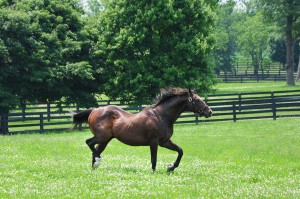


 THE VAULT: Horse racing past and present